Discover the key differences, benefits, and responsibilities in this essential guide, and learn which structure best suits your goals.
Are you confused about how to structure your business to protect your assets, attract investors, or reduce taxes? Deciding between a trust and a company can shape your financial future and long-term growth. Keep reading to discover the strengths and weaknesses of both structures and understand how to choose the right one for your business in 2026 and beyond.
What Is a Trust?
A trading trust is a business setup where a trustee manages and owns assets on behalf of the trust. The trustee, who can be an individual or a company, is responsible for running the business. The trustee:
- Can buy and sell assets;
- Manage the trust’s assets; and
- Distribute income or capital to beneficiaries or unitholders.
The trust itself is not a separate legal entity – the trustee is. The trustee:
- Manages and directs the trust’s activities; and
- Assists in full legal liability for its debts and liabilities.
- In many cases, the company acts as a trustee, which helps limit personal liability for business owners.
There are several types of trusts commonly used in business, such as:
- Discretionary trusts: allow for flexible income and capital distributions.
- Unit trusts: operate like companies but have unitholders instead of shareholders.
- Specific trusts: have set beneficiaries and fixed distribution rules.
- Hybrid trust: combines features of both discretionary and unit trusts.
What Is a Company?
A company is a separate legal entity, separate from its directors and shareholders. It has its own rights and liabilities – just like a person. A company can buy property, sign contracts and act under its own name. When a company incurs debt, the debt belongs to the company, not its directors or shareholders.
This separation provides strong protection for owners while giving the business a professional, scalable structure.
Why Is Your Business Structure Important?
Whether you are starting a new venture or restructuring an existing business, choosing the right setup is essential. The business structure you choose will:
- Affect how much tax you pay;
- Determine how well your personal assets are protected; and
- Impact your ability to attract funding or investors.
Regularly reviewing your structure ensures that it still fits your business goals and personal circumstances. Both trusts and companies offer unique benefits but also have different legal and financial responsibilities. Always consult an accountant or advisor before setting up or changing your structure to avoid hidden costs or compliance issues.
Next Read: Beyond the Books: The 3 Key Numbers Every Australian Allied Health Practice Must Master in 2026
Advantages of a Company Business Structure
Limited Liability
A company operates as its own legal entity, separate from its owners. The profits and debts of the company belong to the business, not the shareholders. This separation protects shareholders from being personally liable for the company’s debts or financial obligations. In simple terms, if the company borrows money, the personal assets of the shareholders are protected.
Taxes
Companies receive lower corporate tax rates compared to personal tax rates. This means that the business pays less tax on its profits than a sole proprietor. For example, a sole proprietor pays tax through their personal income, while a company pays tax independently under the corporate tax system. This structure can help reduce the overall tax burden for profitable businesses.
Disadvantages of a Company Business Structure
Complexity
- There are more legal and regulatory duties involved in running a company. The Corporations Act outlines a number of responsibilities for directors – such as acting responsibly, being honest and avoiding misuse of their role or company information.
- In addition, companies must comply with ATO regulations, which include filing annual tax returns and making superannuation payments for eligible employees.
- Companies must also meet ASIC requirements by keeping financial records up to date and notifying the company of any major changes.
- Due to these legal demands, it is advisable to seek help from professionals who can ensure compliance and smooth registration.
Costs
- Forming and running a company involves both set-up and ongoing costs. Set-up costs include business name registration, legal assistance and professional advice.
- Ongoing costs include routine administrative costs such as filing annual company tax returns, which can cost hundreds of dollars each year.
- In addition, ASIC annual review fees (previously $267 for private companies in 2020) add to the annual cost of maintaining a company.
Advantages of Trust Business Structures
There are many advantages to operating a business through a trust:
- You can distribute income among beneficiaries to reduce overall taxes using the most tax-efficient rates.
- Trust structures offer greater privacy than other setups.
- Beneficiaries do not directly own the assets, so business assets are protected from the beneficiary’s bankruptcy.
- However, unit trusts can be treated as personal assets and can still be used by creditors in bankruptcy cases.
Disadvantages of Trust Business Structures
A major disadvantage of operating through a trust is that there are mandatory income distributions each fiscal year. Trusts must distribute profits to beneficiaries annually; otherwise, undistributed income may be taxed at the highest marginal rate.
Trusts also need their own tax file number and must file an annual tax return.
Other disadvantages include:
- High setup costs and complex ongoing administration.
- Complications when changing or dissolving a trust.
- Limited borrowing options.
- The trustees outlined in the trust deed have limited powers.
- Business losses cannot be distributed, and profits may be subject to higher taxes.
- A trust can only operate for a maximum of 80 years.
- A trust is only personally liable for debts unless a corporate trustee is used, which limits liability.
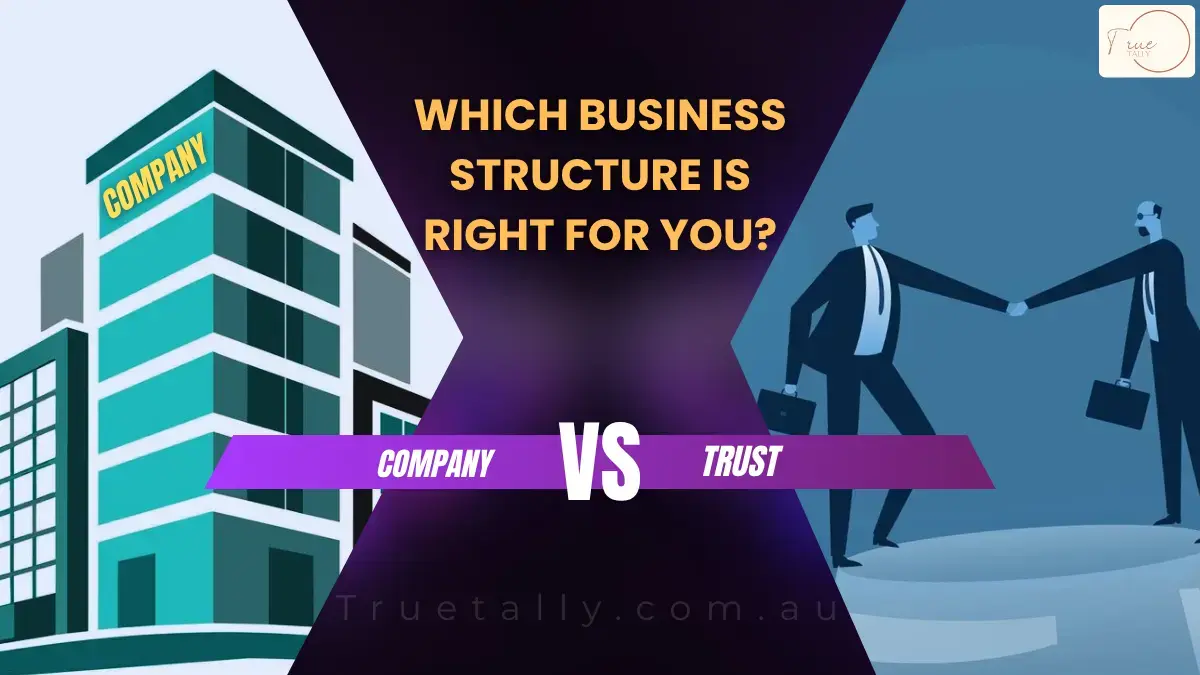
Company vs. Trust: Which Business Structure Suits Your Needs?
Deciding between a company or trust structure can have a significant impact on your business – legally, financially, and strategically. Your best choice will depend on your personal objectives, financial plans, and how you want to manage profits and liabilities.
If your goal is to have flexibility in the distribution of profits and potentially take advantage of the 50% capital gains tax (CGT) discount, a trust structure may be an ideal fit. This structure often works well for family-owned businesses, allowing income to be allocated among members in a tax-efficient manner.
For entrepreneurs aiming to attract investors or invest heavily in research and development (R&D), a company structure is more advantageous. It facilitates capital raising, supports long-term growth and provides formal ownership through shares.
In terms of asset protection, both trusts and companies provide protection for personal assets. Trusts generally require a corporate trustee to ensure strong protection, while companies are fundamentally separate legal entities – providing legal protection for directors and shareholders.
Recommended to Read: Non-Commercial Losses: What Are & How to Defer Them? (A Guide)